Anno 1800 Beginner's Guide: Building Your First Self-Sufficient Empire
A beginner's guide to Anno 1800, covering island selection, your first production chains, population tiers, and the trade-route habits that keep a new empire from stalling out.
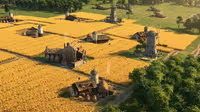
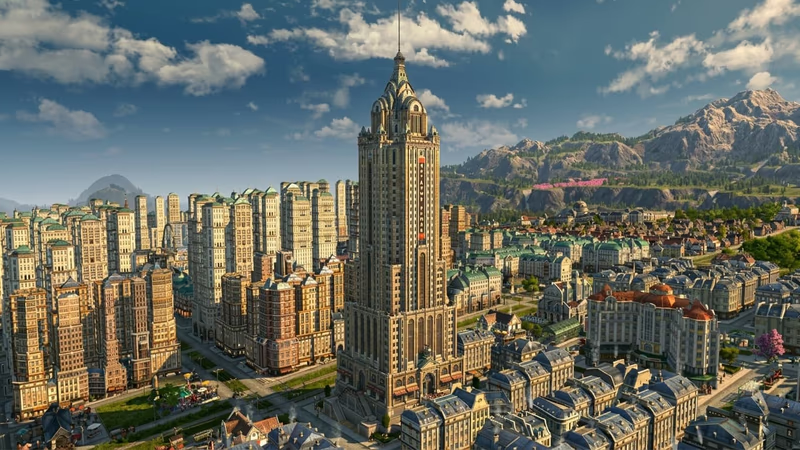
Anno 1800 — Ubisoft Blue Byte

Ubisoft Blue Byte had a problem heading into 1800. Its previous entry, Anno 2205, had pushed the series into orbit, literally, and lost the thing that made Anno worth playing in the first place: the slow, greedy satisfaction of watching a dirt road turn into a smokestack skyline. Anno 1800 walks that bet back. It plants the series in the second Industrial Revolution, between the steam engine and the department store, and rebuilds everything around a single question: what happens when a farming village discovers electricity.
The answer, six years after launch and a full season pass deep, is still one of the densest city-builders on the market. This isn't a game about painting pretty streets. It's about chasing a resource chain through four continents until your population demands something you haven't built a dock for yet.
Anno 1800's population tiers aren't cosmetic unlocks, they're the entire pressure system. Farmers want potatoes and soap. Workers want beer, work clothes, and sewing machines. Push them into Artisans and then Engineers, and suddenly a single resident wants reading glasses sourced from a glassworks that needs sand from a quarry that needs explosives from a chemical plant three islands away.
The genius of the system is how it punishes laziness. You can't just stack more farms. Growth demands you keep rebuilding your logistics network from scratch, island by island, dock by dock.
The Old World handles your temperate-climate goods, bricks, steel, basic textiles, but Anno 1800 forces you off that island fast. Sugar, rum, and cotton only grow in the New World, a tropical region you reach by crossing open ocean with cargo ships that can sink to storms or pirates if you undercrew your escort fleet.
It's a puzzle that rewards patience over reflexes. The player who wins isn't the fastest clicker, it's the one who draws the cleanest trade network on the map.
Land of Lions and Seeds of Change, the DLC chapters covering the Arctic and the African region of Enbesa, do more than add scenery. The Arctic strips away farmland entirely and replaces it with oil rigs and expedition logistics, a hostile biome where you extract rather than cultivate. Enbesa inverts the formula again with irrigation-based agriculture and a culture-points currency tied to artifact collection rather than simple trade goods.
Anno 1800 is one of the few city-builders where zooming all the way in actually rewards you. Dockworkers haul crates, chimneys cough real smoke that drifts with the wind direction, and a city square fills with period-accurate horse carts and top hats once it crosses into the Artisan tier. The Anno Engine renders thousands of individually animated citizens without the game buckling, even on a sprawling multi-island save file.
The score matches the ambition. Composer Jan Nemecek leans into waltzes and marches that shift instrumentation as your city climbs tiers, a beer hall accordion giving way to full orchestral brass once electricity lights up the skyline. It's a soundtrack that tracks your progress as closely as the production chain graphs do.
Pros:
Cons:
Anno 1800 earns its reputation as the series' high point by refusing to simplify. It hands you a sprawling, interdependent economy and trusts you to untangle it, island by island, ship by ship. Six years of DLC haven't bloated the design, they've deepened it, folding oil rigs and irrigation canals into a supply chain that already demanded your full attention. This is the rare city-builder that gets harder to master the longer you play it, and that's exactly the point.

Affiliate link: Support the blog via Instant Gaming at no extra cost.
Anno 1800
Others Posts
A beginner's guide to Anno 1800, covering island selection, your first production chains, population tiers, and the trade-route habits that keep a new empire from stalling out.
Blizzard's StarCraft proved three wildly asymmetric factions could stay perfectly balanced, turning a Warcraft II engine refit into the game that built South Korea's esports industry and defined competitive RTS for a generation.

New to StarCraft? Learn how to pick a faction, build a solid economy, and avoid the mistakes that get new commanders overrun in their first ladder matches.
Black Lab Games brought Warhammer 40k's tabletop wargame to life with grid-based tactics, blood-soaked executions, and the aggressive Momentum system.

Ensemble Studios proved RTS games can thrive on a gamepad. We analyze Halo Wars: Definitive Edition’s 60 FPS performance, Blur cutscenes, and UNSC lore.


A newcomer's guide to Portal 2's controls, gel and funnel mechanics, and co-op basics - everything you need before Aperture Science starts testing you for real.

A practical, course-by-course guide to Super Mario 64 - how to navigate Peach's Castle, which Stars to chase first, and how to actually get all 120 without wasting hours on the ones that trip everyone up.

An engineering retrospective on the Nintendo Game Boy Color. We explore how a double-speed Sharp SM83 core, a backward-compatible palette-mapped color LCD, and translucent 'Atomic Purple' shells turned a stopgap handheld into the system that carried Pokémon's second generation.
Analysis of the PlayStation 4 and PS4 Pro hardware. We examine the shared CPU bottleneck, the mirrored butterfly GPU design, memory optimizations, and the hardware-level checkerboard rendering that enabled the 4K transition.
guides
Ten essential tips for starting Yakuza 0: managing early yen before Real Estate Royale and Cabaret Club Czar open up, navigating Kamurocho and Sotenbori without getting lost, and understanding the save system so you never lose progress.
