Red Dead Redemption Review: The Western That Redefined Open-World Gaming
Rockstar San Diego's Red Dead Redemption traded Liberty City's skyline for the dying American frontier, delivering one of the finest open-world westerns ever made.
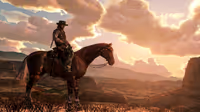
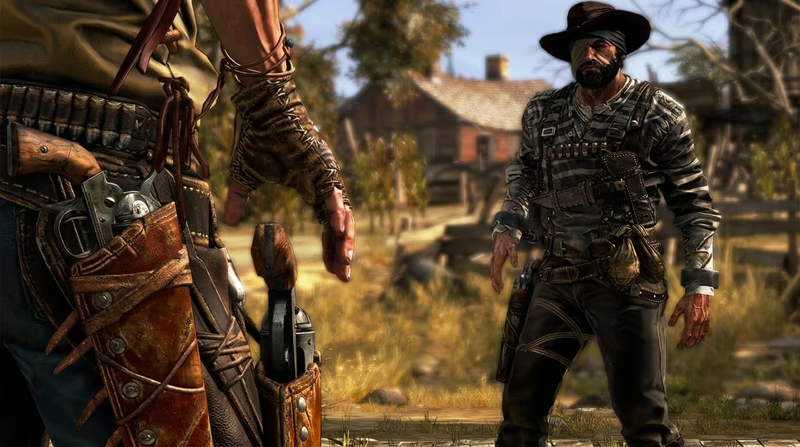
Call of Juarez: Gunslinger — Techland's cel-shaded love letter to the Wild West

By 2013, the Call of Juarez series had already tried gritty historical drama and a modern-day crime detour that most players would rather forget. Techland's answer wasn't a bigger budget or a more serious tone. It was the opposite: strip the Western down to its purest form, hand it to a grizzled old bounty hunter named Silas Greaves, and let him lie about it.
Gunslinger opens in a saloon, where Greaves spins yarns about gunning down Billy the Kid, riding with the Clantons, and standing across from Pat Garrett. Every story is suspect, every detail negotiable. That framing device turns out to be the smartest thing Techland ever put in a Call of Juarez game, and it carries a five-hour arcade shooter further than it has any right to go.
Greaves narrates in real time, and the world listens. Call a shootout "twenty men strong" and the environment spawns more outlaws mid-fight. Misremember a barn as a saloon and the building redresses itself while you're still standing in it. Characters appear mid-sentence, correct the record, and vanish again when Greaves catches himself exaggerating.
It's a structural trick lifted from unreliable-narrator fiction, not a typical shooter cold open. The six chapters cover real frontier figures — Jesse James, the Earp brothers, John Wesley Hardin — filtered through decades of barroom retelling until fact and legend blur past separating.
By the final chapter, the game pulls its own rug out from under the player in a way few six-hour shooters bother attempting.
Strip away the narrative wrapper and Gunslinger is an old-school corridor shooter built for score chasing, not cover-based tactics. Combat rewards aggression: headshots, melee finishers, and chained kills feed a combo meter that unlocks Concentration Mode, a slow-motion window where every shot is a guaranteed headshot as long as the meter holds.
Standoffs break the rhythm deliberately. The camera pulls back, time stalls, and the player has to read an opponent's draw hand and fire a split second after it moves — too early and the shot goes wide, too late and Greaves eats a bullet. These one-on-one duels against named outlaws land with far more tension than the corridor shootouts around them, precisely because they ask for patience instead of trigger speed.
Chrome Engine 5 powers a look that owes more to pulp Western paperback covers than to photorealistic shooters of the same era. Sun-bleached oranges, dusty browns, and watercolor-streaked skies replace the muddy realism of the earlier games, and the cel-shaded character models hold up a decade later in a way that polygon-counting shooters from 2013 simply don't.
Environmental storytelling leans into the same bit: bullet holes stay etched in wood long after a fight ends, and the occasional "painting coming to life" transition during Greaves' most tangled lies sells the unreliable-narrator conceit visually as well as mechanically.
Between story missions, optional side paths send Greaves after wanted outlaws for bounty money, which feeds directly into a skill tree spent on perks rather than stat sliders — faster reloads, bigger Concentration Mode windows, extra throwing-knife capacity. None of it reinvents the arcade shooter's upgrade loop, but it gives the between-mission downtime a reason to exist beyond collectible-hunting.
Score attack and arcade modes extend the package past its short campaign, rewarding replays of individual chapters for leaderboard chasing — a concession to the genre's arcade roots that fits a game built around a guy bragging about how many men he's killed.
Pros:
Cons:
Call of Juarez: Gunslinger shouldn't work as well as it does. It's a budget-priced, single-player-only shooter built on a framing gimmick, and yet that gimmick carries real weight, turning six short chapters into a genuinely memorable retelling of frontier myth. Techland never topped this entry in the series, and more than a decade later it remains the best argument that a Western shooter doesn't need Red Dead's scale to land its shots.

Affiliate link: Support the blog via Instant Gaming at no extra cost.
Call of Juarez: Gunslinger
Others Posts
Rockstar San Diego's Red Dead Redemption traded Liberty City's skyline for the dying American frontier, delivering one of the finest open-world westerns ever made.
In an era where third-person shooters were defined by chest-high walls, muddy color palettes, and slow, methodical pacing, PlatinumGames decided to strap rocket boosters to the genre's knees. Directed by the legendary Shinji Mikami

This field manual deconstructs the primary bosses of the campaign, offering precise tactical analysis to dismantle them piece by heavy-metal piece.
Is Crysis just a hardware-melting benchmark or a genuine FPS masterpiece? We analyze CryEngine 2, Nanosuit mechanics, destructible physics, and the controversial Ceph shift.
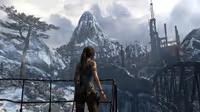
Crystal Dynamics' 2013 reboot strips away the puzzle-box gymnast and forges a desperate, bloodied survivor, delivering one of the decade's most confident franchise reinventions.
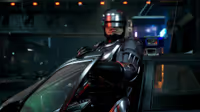
RoboCop: Rogue City: Teyon's faithful adaptation, Peter Weller's return, the sheer power of the Auto-9, and the gritty streets of Old Detroit.
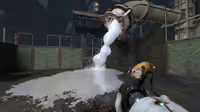
A newcomer's guide to Portal 2's controls, gel and funnel mechanics, and co-op basics - everything you need before Aperture Science starts testing you for real.
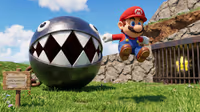
A practical, course-by-course guide to Super Mario 64 - how to navigate Peach's Castle, which Stars to chase first, and how to actually get all 120 without wasting hours on the ones that trip everyone up.
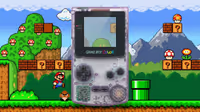
An engineering retrospective on the Nintendo Game Boy Color. We explore how a double-speed Sharp SM83 core, a backward-compatible palette-mapped color LCD, and translucent 'Atomic Purple' shells turned a stopgap handheld into the system that carried Pokémon's second generation.

Analysis of the PlayStation 4 and PS4 Pro hardware. We examine the shared CPU bottleneck, the mirrored butterfly GPU design, memory optimizations, and the hardware-level checkerboard rendering that enabled the 4K transition.
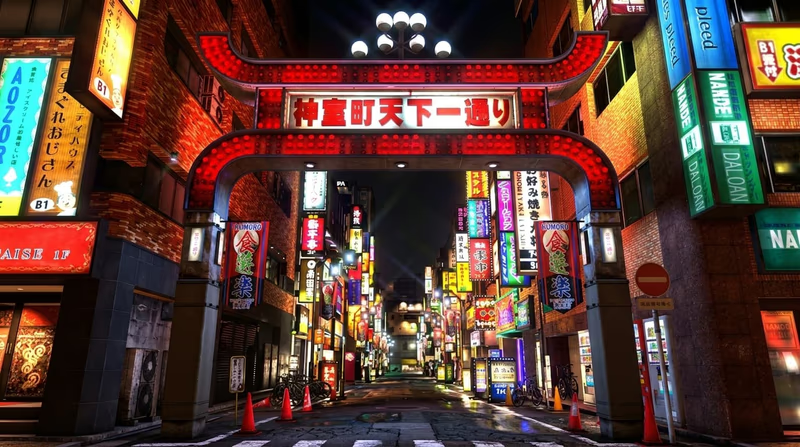
guides
Ten essential tips for starting Yakuza 0: managing early yen before Real Estate Royale and Cabaret Club Czar open up, navigating Kamurocho and Sotenbori without getting lost, and understanding the save system so you never lose progress.
