Far Cry 3 Review
Jason Brody's descent into hell, Vaas Montenegro's overwhelming charisma, and the formula that redefined Ubisoft forever.

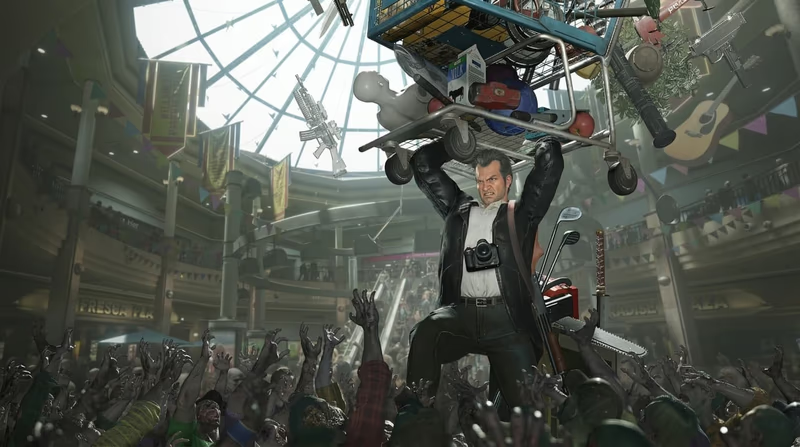
Frank West returns to the Willamette Parkview Mall, rebuilt in Capcom's RE Engine.

Frank West never got the respect his first outing deserved. The 2006 original buried a genuinely sharp survivor-management game under a camera that fought you, a save system that punished exploration, and zombie pathing that occasionally forgot what "chase" meant. Dead Rising Deluxe Remaster doesn't erase that history, it corrects it. Capcom rebuilt the Willamette Parkview Mall from the ground up in the RE Engine, the same toolset behind Resident Evil 2 and 4's remakes, and handed Frank a combat kit that finally matches his ambition. The 72-hour countdown is still merciless. The difference is that dying to it now feels like your mistake, not the engine's.
The Parkview Mall was always the real star, and the remaster treats it that way. Colby's Movieland, the Food Court, Paradise Plaza, Al Fresca Plaza, Leisure Park, Entrance Plaza, Wonderland Plaza, each zone has been re-lit and re-textured with the kind of granular detail the original PS360-era hardware simply couldn't push. Storefront signage reads clearly now instead of dissolving into texture mud at a distance, and the zombie horde density has been tuned upward rather than capped for frame-rate safety. Capcom targets 4K at 60 FPS on PS5 and Series X, and it mostly holds even when a thousand-strong horde crowds a single plaza.
Nothing about the core structure got softened for a modern audience, and that's the right call. You still have 72 in-game hours, roughly seven real hours per playthrough if you're efficient, to investigate the outbreak, document it with Frank's camera, and rescue as many of the mall's trapped survivors as you can shepherd back to the safe room. Miss a case mission's window and it's gone for that save. Escort three survivors at once and watch one wander into a psychopath's line of sight anyway. The remaster adds a handful of quality-of-life concessions, better survivor AI pathing and a slightly more forgiving escort radius, but it refuses to remove the clock's teeth. That tension between information overload and the ticking countdown remains Dead Rising's signature trick, and it still works.
Combat is where the Deluxe Remaster earns its subtitle. The original's stiff, animation-locked swings gave way to a proper combo system borrowed from Capcom's modern action pedigree, Frank can now chain weapon strikes, dodge-cancel into counters, and improvise makeshift tools with far less input delay. Boss fights against psychopaths like Cliff Hudson and Brad Garrison hit harder as a result, since the old exploit of circle-strafing a stunlocked AI no longer trivializes them. The core 50 cases and side quests remain structurally intact, Capcom clearly treated the mission design as sacred, but pacing tweaks shave down the dead travel time between objectives that used to eat into your precious 72 hours.
Pros:
Cons:
Dead Rising Deluxe Remaster does what a remaster rarely manages, it makes the argument for why the original mattered instead of just polishing its surface. Frank West's mall is still a pressure cooker built on an unforgiving clock, but now the combat, the crowds, and the camera all pull in the same direction instead of fighting the player alongside the zombies. It isn't a full reinvention, and a few rough seams from the 2006 source material peek through. What's left is the best version yet of a genuine survival-horror landmark.

Affiliate link: Support the blog via Instant Gaming at no extra cost.
Dead Rising Deluxe Remaster
Others Posts
Jason Brody's descent into hell, Vaas Montenegro's overwhelming charisma, and the formula that redefined Ubisoft forever.
Before Halo CE, console FPS games were a clunky joke. Discover how Bungie's golden triangle of combat and AI rewrote the rulebook forever.

How Capcom's icy masterpiece redefined the third-person shooter and unleashed a perfect storm of mechs, monsters, and ticking-clock survival.

A definitive tactical breakdown to shattering colossal Akrid and scrapping NEVEC’s deadliest Vital Suits.

Tarsier Studios' Little Nightmares traps players inside The Maw, a rusting vessel of grotesque giants, proving that true horror needs no jump scares—just scale, silence, and a child's-eye view of monstrosity.


A newcomer's guide to Portal 2's controls, gel and funnel mechanics, and co-op basics - everything you need before Aperture Science starts testing you for real.

A practical, course-by-course guide to Super Mario 64 - how to navigate Peach's Castle, which Stars to chase first, and how to actually get all 120 without wasting hours on the ones that trip everyone up.

An engineering retrospective on the Nintendo Game Boy Color. We explore how a double-speed Sharp SM83 core, a backward-compatible palette-mapped color LCD, and translucent 'Atomic Purple' shells turned a stopgap handheld into the system that carried Pokémon's second generation.

Analysis of the PlayStation 4 and PS4 Pro hardware. We examine the shared CPU bottleneck, the mirrored butterfly GPU design, memory optimizations, and the hardware-level checkerboard rendering that enabled the 4K transition.
guides
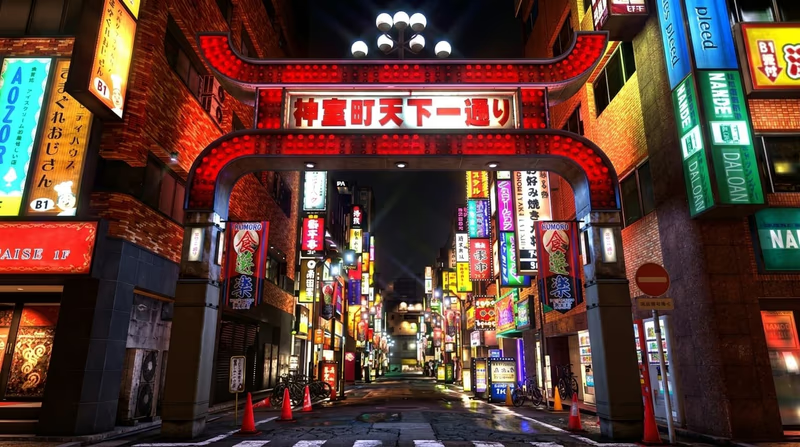
Ten essential tips for starting Yakuza 0: managing early yen before Real Estate Royale and Cabaret Club Czar open up, navigating Kamurocho and Sotenbori without getting lost, and understanding the save system so you never lose progress.
