Killzone Shadow Fall Review
A cold war setting, sleek gunplay, and stunning tech. Was Killzone Shadow Fall a worthy PS4 launch title or a franchise killer?
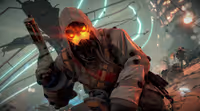
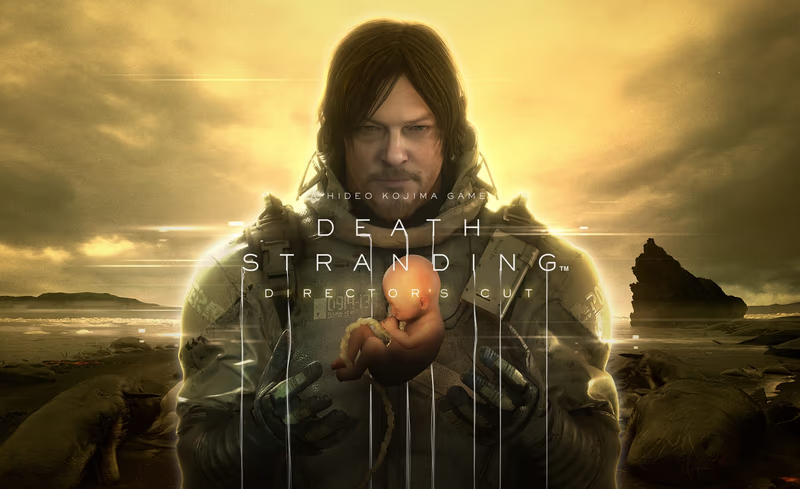
Image captured on PS5
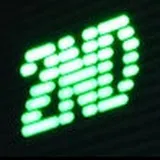
Reevaluating Hideo Kojima's deeply divisive delivery simulator, a game whose themes of isolation, fractured societies, and the desperate need for connection became an eerie reality just months after its original release.
When Death Stranding originally launched in late 2019, it was met with deep polarization. Many praised its audacious originality, while others dismissed it as a glorified, tedious "walking simulator." But nobody could have predicted what would happen just a few months later. As the global pandemic forced humanity into lockdown, the bizarre science-fiction world Hideo Kojima created suddenly felt like a documentary. Returning to this universe through the Death Stranding Director’s Cut is a profoundly different experience; the game has not changed its soul, but our real-world context has transformed it into a startlingly relevant masterpiece.
For the uninitiated, Death Stranding is set in a post-apocalyptic United States devastated by a supernatural cataclysm known as the "Death Stranding." This event blurred the lines between the living and the dead, unleashing invisible, hostile entities called BTs (Beached Things) and "Timefall"—a rain that rapidly ages whatever it touches.
Humanity has retreated into isolated, underground bunkers, too terrified to step outside. You play as Sam Porter Bridges (portrayed by Norman Reedus), a blue-collar courier tasked with trekking across the ruined, hauntingly beautiful landscape. His mission is twofold: deliver essential cargo to these isolated survivors and connect their bunkers to the Chiral Network, a futuristic internet designed to unify a broken nation.
Playing the Director's Cut today, the narrative hits with the weight of a freight train. In 2020, we all experienced what it meant to live in those bunkers. We were cut off from our loved ones, communicating only through screens and holograms, entirely dependent on the bravery of essential workers and delivery drivers who braved the outside world so the rest of us could survive.
Suddenly, Sam Porter Bridges is no longer just a sci-fi protagonist; he represents the delivery drivers who became the unsung heroes of our own real-world crisis. The themes of touch deprivation, the psychological toll of prolonged isolation, and the desperate, innate human desire to reconnect are explored with profound empathy. Rebuilding roads, leaving ladders for other players, and receiving a simple "Like" for helping a stranger in the game's asynchronous multiplayer feels incredibly cathartic. It is a game about healing a wounded world, one step at a time.
While the narrative context has aged flawlessly, the original game's mechanics were famously punishing. The Director's Cut brilliantly addresses this by introducing a suite of new tools that respect the player's time without compromising the core logistical challenge.
Beyond delivery tools, this edition adds substantial new content. The standout is the Ruined Factory questline, a fantastic homage to Kojima's Metal Gear Solid roots that forces players to engage in tactical, indoor stealth and combat. There is also a newly added Firing Range to test weaponry, and surprisingly, a full-fledged racing track called the Fragile Circuit.
On a technical level, particularly on the PlayStation 5, the game is a triumph. The DualSense haptic feedback is truly revolutionary. You can literally feel the tension in the adaptive triggers shift as Sam loses his balance under heavy weight, and the controller's vibrations change remarkably depending on whether you are trudging through thick mud, deep snow, or smooth asphalt. Combined with a rock-solid 60 FPS and ultrawide display support, the desolate Icelandic-inspired landscapes have never looked or felt more immersive.
Pros:
Cons:
Death Stranding Director’s Cut will not convert those who fundamentally dislike the concept of managing inventory and traversing terrain. However, for anyone who bounced off the original due to its punishing early hours, or for those who simply missed it, this is the definitive way to experience Kojima’s vision.
What was once viewed as a strange, self-indulgent experiment is now clearly recognized as a prophetic work of art. It is a grueling, gorgeous, and deeply hopeful journey that reminds us that even when the world is broken and we are separated by impossible distances, we only survive by helping each other carry the load.

Affiliate link: Support the blog via Instant Gaming at no extra cost.
Death Stranding Director's Cut
Others Posts
A cold war setting, sleek gunplay, and stunning tech. Was Killzone Shadow Fall a worthy PS4 launch title or a franchise killer?
A deep dive into Raven Software’s brutal 2005 shooter, a game that traded the demonic scares of Doom 3 for the disturbing, flesh-and-metal horrors of the Strogg assimilation.
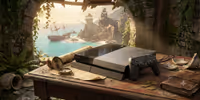
We analyse how Sony abandoned exotic proprietary silicon for standardized x86 architecture, the critical 8GB GDDR5 memory upgrade, and how Mark Cerny's developer-focused design philosophy dominated the eighth console generation.
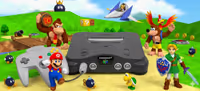
We dismantle the Nintendo 64 to understand its revolutionary graphics architecture, analyze the stubborn—and costly—decision to stick with ROM cartridges, and celebrate the nostalgic magic of a console that pioneered 3D movement and defined the golden era of split-screen local multiplayer.
Rare's stunning Xbox graphics, the controversial censorship cuts, and the shift to class-based online war.

Lost Odyssey: Hironobu Sakaguchi's Xbox 360 epic, Nobuo Uematsu's soundtrack, turn-based tactical combat, and the emotional Thousand Years of Dreams.
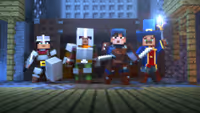
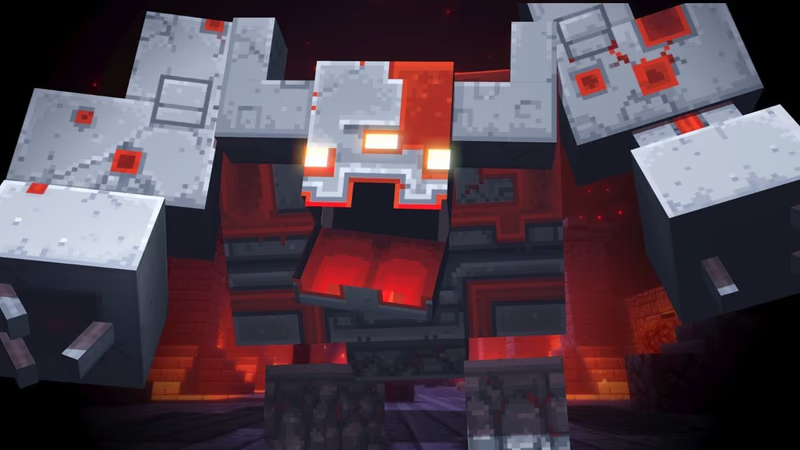
Are the Minecraft Dungeons DLCs worth buying? We break down all 6 expansions, their biomes, unique mechanics, boss fights, and rank the absolute must-haves.

Master turn-based combat in Gears Tactics. Learn to chain executions for infinite Action Points, optimize class builds, and crush colossal bosses.

Analysis of the PlayStation 4 and PS4 Pro hardware. We examine the shared CPU bottleneck, the mirrored butterfly GPU design, memory optimizations, and the hardware-level checkerboard rendering that enabled the 4K transition.

PlayStation 5 Pro hardware: PSSR, Advanced Ray Tracing, and the AI Revolution. We analyze Sony's PlayStation Spectral Super Resolution (PSSR), RDNA 4 Ray Tracing advancements, and the engineering behind the end of the Fidelity vs. Performance compromise.
guides
Conquer the toughest bosses in Minecraft Dungeons. Master attack patterns, exploit weak points, and equip the best builds for every major fight.
