The Swan Song of Silicon: A Technical Review of the Sega Dreamcast
An analytical autopsy of a machine that traveled from the future only to die too soon. We explore the brilliant, hyper-efficient engineering of the Sega Dreamcast.

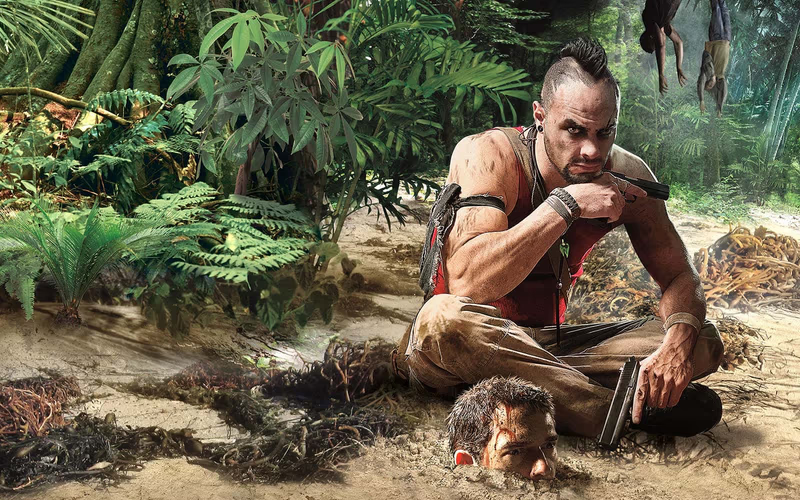
Far Cry 3 - Vaas Montenegro Official Key Art

Released in 2012, Far Cry 3 didn't just resurrect Ubisoft's franchise; it wrote the definitive design manual for open-world gaming for the next decade. Trapping the player in a tropical paradise turned nightmare, pushing them into madness, and pitting them against one of gaming's greatest villains was a masterstroke of immersion and tactical progression.
Far Cry 3 hit the industry with massive impact, standardizing a gameplay loop that the rest of the industry would relentlessly clone. The story begins with a group of rich, reckless, and highly privileged young adults whose skydiving trip lands them squarely in the hands of brutal pirates on the Rook Islands.
You take control of Jason Brody. The contrast between the terrified Jason of the opening minutes—who can barely hold a gun and cries after his first kill—and the relentless, bloodthirsty killing machine he becomes forms one of the most compelling character arcs in the first-person shooter genre.
Michael Mando's psychotic, magnetic performance as Vaas Montenegro completely steals the show. His legendary monologue on "the definition of insanity" and his unpredictable, explosive presence eclipse every other character in the game, elevating him to legendary status.
Jason’s relationship with Citra and the native Rakyat tribe acts as the catalyst for his dark transformation. Driven by mysticism, hallucinogenic drugs, and a progressive loss of humanity, Jason slowly begins to enjoy the slaughter far more than he cares about rescuing his captured friends.
Unfortunately, the narrative suffers a severe drop in quality after the climax with Vaas. The transition to the southern island and the introduction of the true main antagonist, Hoyt Volker, feels flat and lacks the manic, psychological energy that drove the first two-thirds of the campaign.
This was the title that codified the modern "Ubisoft Formula" of open-world design:
The game ties its progression directly to the lethal environment. To survive, you must engage in the island's brutal food chain, hunting specific wildlife (sharks, tigers, tapirs, Komodo dragons) to craft larger ammo pouches, bigger backpacks, and holsters required to carry up to four weapons.
This physical progression is mirrored beautifully in the Tatau (Jason's skill tree). Every time you unlock a new ability from the Heron, Shark, or Spider branches—granting spectacular chain-takedowns from ledges, deep water, or ziplines—the mystical tribal tattoo on Jason’s left arm visually grows and evolves, signifying his initiation into a true warrior.
Powered by the Dunia 2 engine, the game delivers a stunning, lethal paradise. The lush tropical vegetation, dynamic fire propagation, and crystal-clear beaches create a striking visual contrast with the gruesome human brutality taking place on the sand.
Few moments in gaming history are as unforgettable as the "Kick the Hornet's Nest" mission. Burning down fields of marijuana with a flamethrower while Skrillex and Damian Marley’s Make It Bun Dem blasts through the speakers is absolute cinematic perfection. Backing up these wild set pieces is Brian Tyler's score, which brilliantly fuses tribal percussion with dark, intense electronic beats.
Pros:
Cons:
Far Cry 3 stands as the undisputed pinnacle of the franchise and the blueprint that changed open-world game design forever. By perfectly marrying a compelling psychological descent with highly addictive, player-driven tactical freedom, Ubisoft crafted a violent, hallucinogenic journey that the series has been desperately trying to replicate ever since.

Affiliate link: Support the blog via Instant Gaming at no extra cost.
Far Cry 3
Others Posts
An analytical autopsy of a machine that traveled from the future only to die too soon. We explore the brilliant, hyper-efficient engineering of the Sega Dreamcast.
Stepping onto the war-torn surface of Stroggos is a death sentence if you come unprepared. In Quake 4, health and ammunition deplete incredibly fast, and the cybernetic alien forces will overwhelm you if you rely on brute force alone.

A comprehensive starter strategy to master the physics, optimize your deliveries, and utilize the new Director’s Cut tools to conquer the apocalyptic wasteland of America.

A deep dive into Raven Software’s brutal 2005 shooter, a game that traded the demonic scares of Doom 3 for the disturbing, flesh-and-metal horrors of the Strogg assimilation.

A retrospective on Star Wars: Republic Commando: LucasArts' gritty military shooter, the brotherhood of Delta Squad, the iconic visor HUD, and the power of "Vode An."

Unlock all 15 Skulls in Halo Wars: Definitive Edition. Learn the required optional objectives, exact map locations, and gameplay modifiers for every campaign mission.
Are the Minecraft Dungeons DLCs worth buying? We break down all 6 expansions, their biomes, unique mechanics, boss fights, and rank the absolute must-haves.

Master turn-based combat in Gears Tactics. Learn to chain executions for infinite Action Points, optimize class builds, and crush colossal bosses.

Analysis of the PlayStation 4 and PS4 Pro hardware. We examine the shared CPU bottleneck, the mirrored butterfly GPU design, memory optimizations, and the hardware-level checkerboard rendering that enabled the 4K transition.

PlayStation 5 Pro hardware: PSSR, Advanced Ray Tracing, and the AI Revolution. We analyze Sony's PlayStation Spectral Super Resolution (PSSR), RDNA 4 Ray Tracing advancements, and the engineering behind the end of the Fidelity vs. Performance compromise.
guides
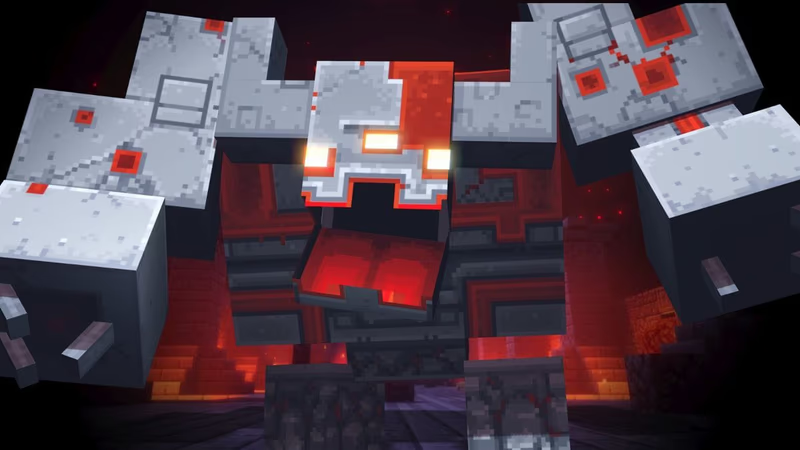
Conquer the toughest bosses in Minecraft Dungeons. Master attack patterns, exploit weak points, and equip the best builds for every major fight.
