The Witcher Review: CD Projekt's Dark Fantasy Debut
CD Projekt RED's 2007 debut adapted Andrzej Sapkowski's novels into a gritty, choice-driven RPG that put the fledgling studio on the map.
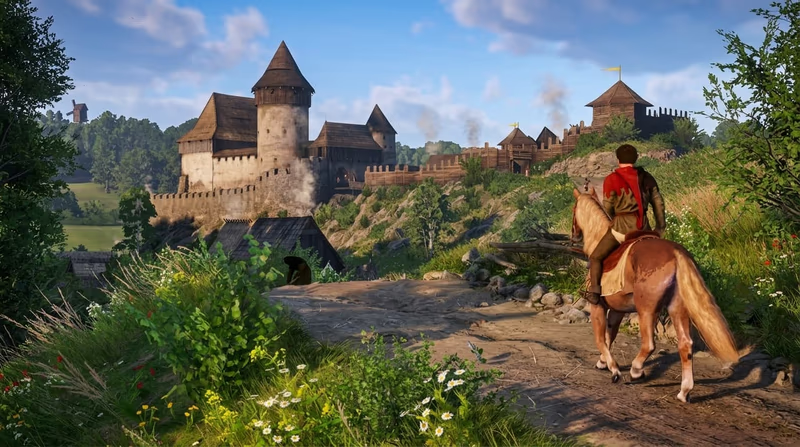
Warhorse Studios traded dragons and magic for authentic 1403 Bohemia and a blacksmith's son with no chosen-one destiny.

Warhorse Studios had no business making this game. A small Czech team with a Kickstarter campaign and a founder who used to run Mafia at 2K set out to build an open-world RPG with zero dragons, zero magic, and zero fast travel that didn't cost stamina. Kingdom Come: Deliverance landed in February 2018 as a love letter to 15th-century Bohemia, close enough to the real history that the studio hired medieval historians and built its castles from period blueprints. You play Henry, a blacksmith's son from the village of Skalitz, thrown into the Bohemian civil war after Cuman mercenaries burn his home and butcher his parents. There's no prophecy waiting for him. He can't even read.
That premise alone separates Kingdom Come from nearly everything else on the shelf next to it. The game asks you to become competent at being a person in 1403, not a hero, and it refuses to hold your hand while you figure that out.
The setting does the heaviest lifting here. Warhorse recreated the real region of Rataje nad Sázavou and the Sázava river valley at roughly 1:9 scale, populating it with lime kilns, tanneries, and monasteries that actually functioned the way their historical counterparts did. Herbs you pick map to real medieval medicine. Armor layers correctly over gambesons and chainmail, piece by piece, and a knight in full plate genuinely shrugs off a peasant's dagger. Nobody casts a fireball. Nobody needs to.
That commitment extends to the game's survival systems, which read as tedious on paper and become the whole point in practice. Henry gets dirty and needs to wash. He gets hungry and needs to eat something other than raw meat, or he'll fall ill. He gets drunk at the tavern and wakes up with a splitting hangover, sometimes missing his horse. None of it is punishing for its own sake; it's Warhorse insisting that survival and social standing are the actual game, not a chore between quest markers.
Kingdom Come's sword-fighting system is the single biggest reason people either bounce off this game in the first two hours or fall in love with it for two hundred. Combat runs on a five-directional system where you aim strikes at an opponent's exposed angles while managing a stamina bar, and a single untrained duel against the blacksmith Bernard will humiliate you before you understand any of it. There's no auto-lock, no cinematic finisher queue bailing you out. You learn the clinch, the riposte, and the perfect-block masterstrokes the hard way, usually face-down in the mud.
Once it clicks, the system rewards real skill the way few action RPGs bother to anymore. Reading an opponent's windup and countering into a masterstroke feels earned in a way that a quick-time-event finisher never does, and the difference between a fight against one bandit and a fight against three is the difference between a tutorial and a near-death experience. Archery runs on a similarly unforgiving model, with a sway meter that punishes rushed shots and no crosshair to lean on.
What holds the whole structure together is how much Kingdom Come trusts its own world to carry weight without a quest marker screaming at you. Side quests rarely resolve the way you expect. A stolen horse investigation in Rattay can spiral into blackmail, false accusations, and a trial where Henry's own testimony gets weighed against his reputation among the townsfolk, built from choices made hours earlier and quests you might have already forgotten. The game remembers whether you've been caught stealing, whether you bathed before meeting the lord, whether you're the kind of man the local priest trusts with a confession.
That reactivity isn't flawless. Load times on original hardware could stretch past a minute, bugs around quest triggers were common at launch, and the main story sometimes strands Henry in fetch-quest busywork between its genuinely gripping set pieces, like the undercover infiltration of a bandit camp in "A Woman's Lot." But the ambition behind it, a fully simulated medieval society that doesn't bend around the player's convenience, still feels rare even years later.
Pros:
Cons:
Kingdom Come: Deliverance earns its reputation the hard way, through a combat system that demands practice, a world that refuses to flatter the player, and a setting researched with more rigor than most history documentaries bother with. It's rough in places Warhorse's budget couldn't quite smooth over, but it built something no major studio was willing to risk: a medieval RPG with the audacity to leave out the magic and dare you to survive on wit, steel, and reputation alone.

Affiliate link: Support the blog via Instant Gaming at no extra cost.
Kingdom Come: Deliverance
Others Posts
CD Projekt RED's 2007 debut adapted Andrzej Sapkowski's novels into a gritty, choice-driven RPG that put the fledgling studio on the map.
Wasteland 2: Director's Cut—inXile's crowdfunding triumph, brutal moral choices, tactical squad-based survival, and post-apocalyptic roleplaying.
Blizzard North's Diablo turned a slow, grid-based roguelike pitch into a real-time click-fest that invented the loot-driven dungeon crawler, built on randomized levels and a single, endless staircase down.
The Order: 1886 transports us to a beautifully grim, smog-choked 19th-century London. But this is not the London of Charles Dickens; it's a battleground.

Ryse: Son of Rome: Crytek's visual spectacle for Xbox One, brutal QTE executions, and its legacy as a cinematic Roman epic.


A newcomer's guide to Portal 2's controls, gel and funnel mechanics, and co-op basics - everything you need before Aperture Science starts testing you for real.

A practical, course-by-course guide to Super Mario 64 - how to navigate Peach's Castle, which Stars to chase first, and how to actually get all 120 without wasting hours on the ones that trip everyone up.
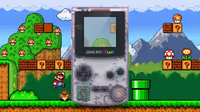
An engineering retrospective on the Nintendo Game Boy Color. We explore how a double-speed Sharp SM83 core, a backward-compatible palette-mapped color LCD, and translucent 'Atomic Purple' shells turned a stopgap handheld into the system that carried Pokémon's second generation.

Analysis of the PlayStation 4 and PS4 Pro hardware. We examine the shared CPU bottleneck, the mirrored butterfly GPU design, memory optimizations, and the hardware-level checkerboard rendering that enabled the 4K transition.
guides
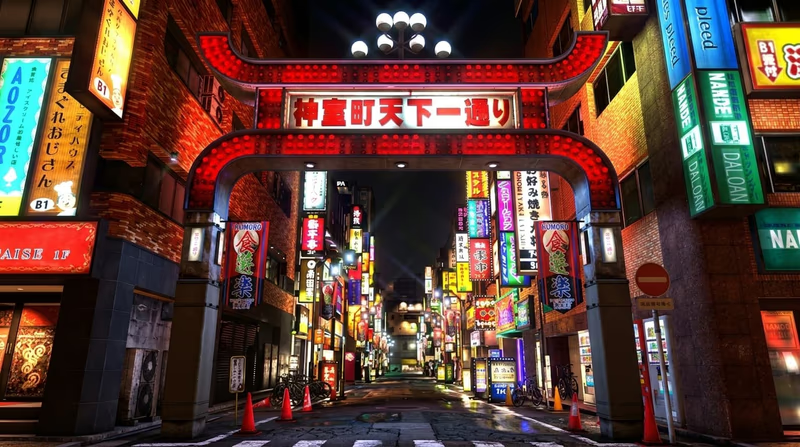
Ten essential tips for starting Yakuza 0: managing early yen before Real Estate Royale and Cabaret Club Czar open up, navigating Kamurocho and Sotenbori without getting lost, and understanding the save system so you never lose progress.
