Gears of War Ultimate Edition
When Epic Games handed the keys to the Gears of War franchise over to Microsoft, the newly formed studio, The Coalition, had a massive point to prove.
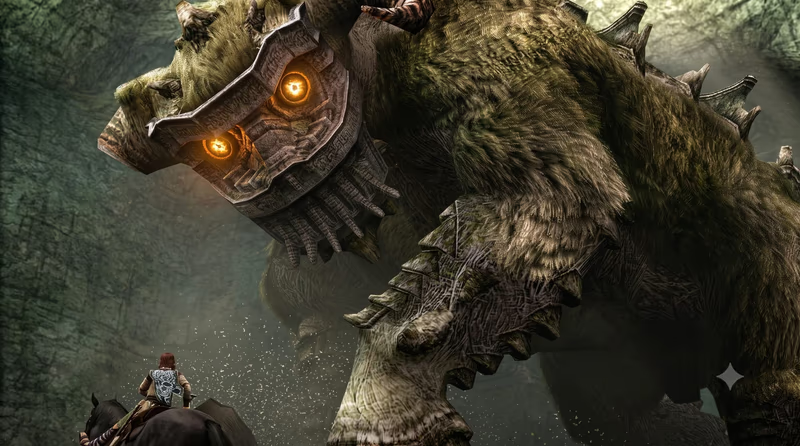
Image captured on Playstation 4 Pro and retouched with Nano Banana.

Following the critical acclaim of Ico, Fumito Ueda and Team Ico set out to challenge conventional game design once again. Shadow of the Colossus revolutionized interactive storytelling through "design by subtraction"—removing traditional towns, NPCs, trash mobs, and sprawling dungeons to strip the adventure down to its purely emotional core.
The premise is as minimalist as it is heartbreaking. You play as Wander, a young man who travels to the edge of the world carrying the lifeless body of a maiden named Mono.
Upon entering a colossal shrine in the forbidden realm, Wander makes a desperate pact with a mysterious entity named Dormin: slay the 16 ancient colossi roaming the land, and Mono will be granted her life back.
The Forbidden Lands serve as a masterclass in atmospheric environment design. Unlike modern open-world titles crammed with quest markers, side distractions, and busywork, this vast continent is silent, empty, and melancholic. The emptiness is intentional; it builds a sense of isolation that makes every encounter feel momentous.
Navigating this desolate landscape is impossible without Agro, Wander's loyal mare.
Agro is not a brainless vehicle; she possesses realistic animal AI, occasionally hesitating at cliff edges or paths she deems unsafe. Navigating the terrain together creates an organic bond between rider and horse that feels far more genuine than scripted companions.
In Shadow of the Colossus, the bosses are the levels. Each titan is a massive, living puzzle that demands keen observation before you can even begin your climb:
As you bring down more colossi, the game subtly shifts its moral tone.
Instead of celebratory fanfare, a colossus’s death is accompanied by Kow Otani’s mournful requiem. Black tendrils burst from the falling beast and pierce Wander, corrupting his physical form step by step as dark horns, pale skin, and ragged clothes take over.
You begin to realize that these majestic, peaceful guardians are not inherently evil; they are merely dormant victims of Wander’s selfish obsession. This realization transforms a heroic quest into a tragic, morally ambiguous descent.
Kow Otani’s orchestral score is widely considered one of the greatest compositions in gaming history, seamlessly shifting from quiet, wind-swept string melodies during exploration to thunderous brass fanfares when riding alongside a flying titan like Phalanx.
Technically, the game was a miracle on the PlayStation 2, pushing the console well past its limits with dynamic fur shading and inverse kinematics.
While the PS2 original suffered from severe frame rate drops, the 2011 PS3 HD remaster restored performance, and Bluepoint Games' 2018 ground-up PS4 remake delivered a breathtaking visual overhaul that preserved Ueda's artistic vision while making the environments look truly next-gen.
Pros:
Cons:
Shadow of the Colossus is a towering achievement in game design that transcends generations. By daring to embrace silence, tragedy, and mechanical simplicity, Team Ico created an emotional, unforgettable masterpiece that remains a cornerstone of the "games as art" debate.

Affiliate link: Support the blog via Instant Gaming at no extra cost.
Shadow of the Colossus
Others Posts
When Epic Games handed the keys to the Gears of War franchise over to Microsoft, the newly formed studio, The Coalition, had a massive point to prove.
Halo: Spartan Assault: 343 Industries' jump into the twin-stick shooter genre, the battles of Sarah Palmer, and the heavy baggage of its mobile origins.

In Shin Chan: Me and the Professor on Summer Vacation, catching rare bugs goes beyond the personal satisfaction of completing your encyclopedia.

This field manual deconstructs the primary bosses of the campaign, offering precise tactical analysis to dismantle them piece by heavy-metal piece.
The Ultimate Combat and Survival Guide: A comprehensive tactical manual for identifying threats, mastering your arsenal, and stockpiling the essential consumables needed to survive the hostile landscapes of a fractured America.
The Tactical Revolution of a Generation - Ghost Recon Advanced Warfighter (GRAW): Ubisoft's groundbreaking tactical shooter, the Cross-Com system, and the birth of the Future Soldier in Mexico City.

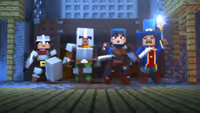
Are the Minecraft Dungeons DLCs worth buying? We break down all 6 expansions, their biomes, unique mechanics, boss fights, and rank the absolute must-haves.

Master turn-based combat in Gears Tactics. Learn to chain executions for infinite Action Points, optimize class builds, and crush colossal bosses.

Analysis of the PlayStation 4 and PS4 Pro hardware. We examine the shared CPU bottleneck, the mirrored butterfly GPU design, memory optimizations, and the hardware-level checkerboard rendering that enabled the 4K transition.

PlayStation 5 Pro hardware: PSSR, Advanced Ray Tracing, and the AI Revolution. We analyze Sony's PlayStation Spectral Super Resolution (PSSR), RDNA 4 Ray Tracing advancements, and the engineering behind the end of the Fidelity vs. Performance compromise.
guides
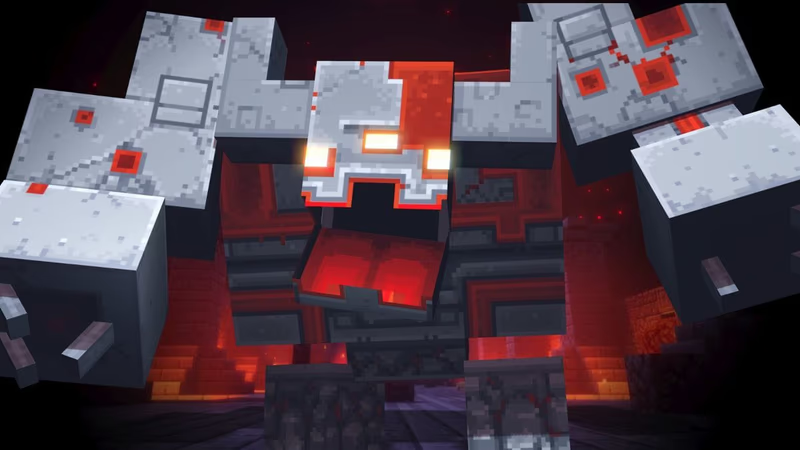
Conquer the toughest bosses in Minecraft Dungeons. Master attack patterns, exploit weak points, and equip the best builds for every major fight.
