Shadow of the Colossus Review: The Masterpiece That Defined Games as Art
Shadow of the Colossus: Fumito Ueda's timeless journey, its lonely world, Wander's tragic quest, and the majesty of the 16 colossi.
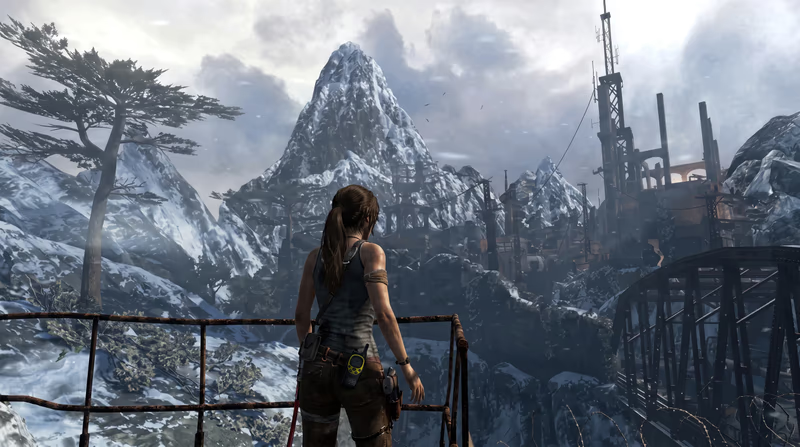
Tomb Raider (2013), Crystal Dynamics / Square Enix
Lara Croft had become a punchline by the time Crystal Dynamics pitched this reboot: a pixelated sex symbol frozen in 1996, dragged through sequel after sequel without ever growing up. The 2013 Tomb Raider tears that version apart and starts over on a nameless island called Yamatai, where a shipwrecked archaeology graduate claws her way out of a cave with a torch and no idea how to fire a bow. The transformation from scared castaway to the Lara Croft who'll later headline Shadow of the Tomb Raider happens over roughly twelve brutal hours, and it's one of the most convincing origin stories the medium has produced.
Crystal Dynamics didn't just reskin the character, they rebuilt the writing around a single idea: Lara has to earn every skill she'll later be famous for. Her first kill, a desperate knife stab against a cultist who's already assaulted her, plays out as a visceral, uncomfortable scene, not a victory lap. Camilla Luddington's voice work carries the whole arc, cracking and ragged in the opening hours before settling into the clipped confidence of someone who's survived something unspeakable.
By the credits, the transformation from grad student to hardened survivor doesn't feel like a character description, it feels earned.
Yamatai is built as a series of interconnected hub zones rather than fully open terrain, and that restraint pays off. Base camps act as fast-travel nodes and skill-upgrade stations, letting you backtrack through the Mountain Village or the Shantytown once you've unlocked the rope ascender or the climbing axe. It's a structure borrowed directly from Metroidvania design, and it gives the island a sense of layered history instead of a checklist of waypoints.
The verticality is the star here. Lara shimmies along crumbling rooftops, zip-lines between burning radio towers, and claws up sheer granite faces using a reworked climbing axe that replaces the old series' floating ledge-grabs with something that reads as physical effort. Weather and lighting shift constantly, rain-slicked rock catching torchlight in a way that still looks sharp over a decade later thanks to the Crystal Engine's dynamic global illumination.
Combat borrows its cover-and-aim rhythm from Uncharted, but the bow is what makes it distinct. Landing a headshot with a fire arrow on an unaware Solarii cultist feels like a precision tool clicking into place, and the skill tree rewards exactly that kind of patient, stealth-first play over spray-and-pray shootouts.
Late-game firefights against the Solarii's armored stragglers lean harder into spectacle than the quieter early hours, and the shift occasionally undercuts the survival fantasy the opening act sells so well.
The series' namesake tombs are optional here, tucked away from the main story path, and that's a deliberate trade-off. Each one is a tight, self-contained puzzle box, counterweight pulleys, burning braziers, collapsing floors, that takes five to ten minutes to solve and rewards a skill point rather than a key story item. It's a smaller dose of classic Tomb Raider platforming than longtime fans wanted, but what's there is sharply designed.
On PC, Tomb Raider became a benchmark title the moment AMD's TressFX hair simulation shipped alongside it, rendering Lara's ponytail as hundreds of individually simulated strands reacting to wind, water, and combat impacts instead of a rigid mesh. It was a genuine showcase feature in 2013, demanding enough that it tanked framerates on anything short of a high-end GPU at launch.
Beyond the hair tech, the Crystal Engine handles Yamatai's dense foliage and weather systems impressively for a cross-generation release still supporting PlayStation 3 and Xbox 360 alongside PC. Destructible vegetation reacts convincingly as Lara crashes through it during forced descents, and the lighting work on cave interiors, torches casting long shadows across wet stone, still holds up as some of the era's best atmospheric rendering.
Pros:
Cons:
Tomb Raider succeeds precisely where it dared to break from its own legacy, trading iconography for a character who has to bleed before she earns the right to be a legend. It's not the puzzle-heavy archaeology adventure longtime series fans grew up with, but as a survival story about a woman clawing her way back from the edge, it's one of the sharpest reinventions a dormant franchise has ever pulled off.

Affiliate link: Support the blog via Instant Gaming at no extra cost.
Tomb Raider
Others Posts
Shadow of the Colossus: Fumito Ueda's timeless journey, its lonely world, Wander's tragic quest, and the majesty of the 16 colossi.
Capcom's remake of Resident Evil 3 trades Nemesis's slow dread for a sprint, delivering a tighter, more action-driven nightmare that burns bright but doesn't last long.
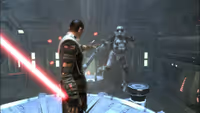
A review of Star Wars: The Force Unleashed, LucasArts' canon-shaking tale of Darth Vader's secret apprentice Starkiller, the Euphoria/DMM physics that sold the Force, and the uneven HD-era execution underneath.
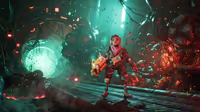
Thunderful's The Gunk turns environmental cleanup into a gameplay loop, letting Rani's vacuum glove strip toxic growth off an alien world to reveal a vibrant ecosystem underneath, a short, pretty ride that never quite escapes its own repetition.
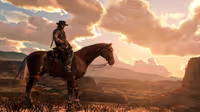
Rockstar San Diego's Red Dead Redemption traded Liberty City's skyline for the dying American frontier, delivering one of the finest open-world westerns ever made.
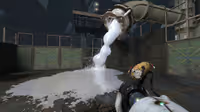
A newcomer's guide to Portal 2's controls, gel and funnel mechanics, and co-op basics - everything you need before Aperture Science starts testing you for real.
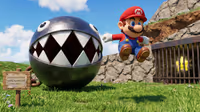
A practical, course-by-course guide to Super Mario 64 - how to navigate Peach's Castle, which Stars to chase first, and how to actually get all 120 without wasting hours on the ones that trip everyone up.
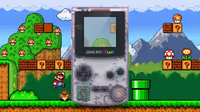
An engineering retrospective on the Nintendo Game Boy Color. We explore how a double-speed Sharp SM83 core, a backward-compatible palette-mapped color LCD, and translucent 'Atomic Purple' shells turned a stopgap handheld into the system that carried Pokémon's second generation.

Analysis of the PlayStation 4 and PS4 Pro hardware. We examine the shared CPU bottleneck, the mirrored butterfly GPU design, memory optimizations, and the hardware-level checkerboard rendering that enabled the 4K transition.
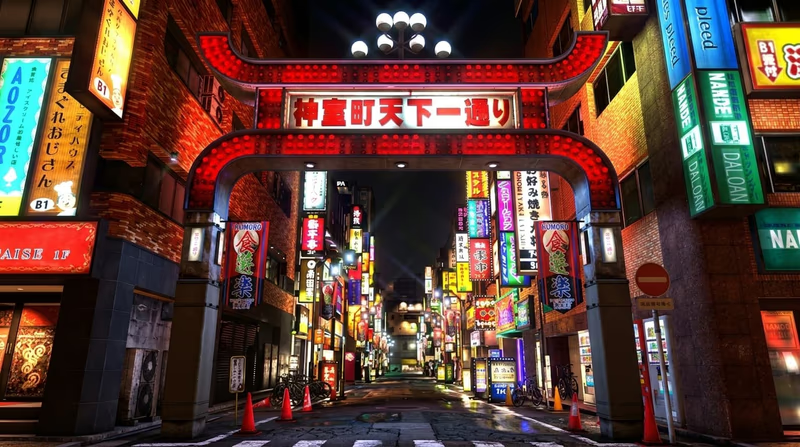
guides
Ten essential tips for starting Yakuza 0: managing early yen before Real Estate Royale and Cabaret Club Czar open up, navigating Kamurocho and Sotenbori without getting lost, and understanding the save system so you never lose progress.
