Lost Odyssey Beginner's Guide: Essential Tips for the Classic JRPG
Master Lost Odyssey's Skill Link system, Aim Ring timing, Guard Condition, and early difficulty spikes with our ultimate beginner's guide.
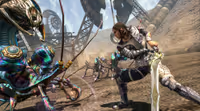
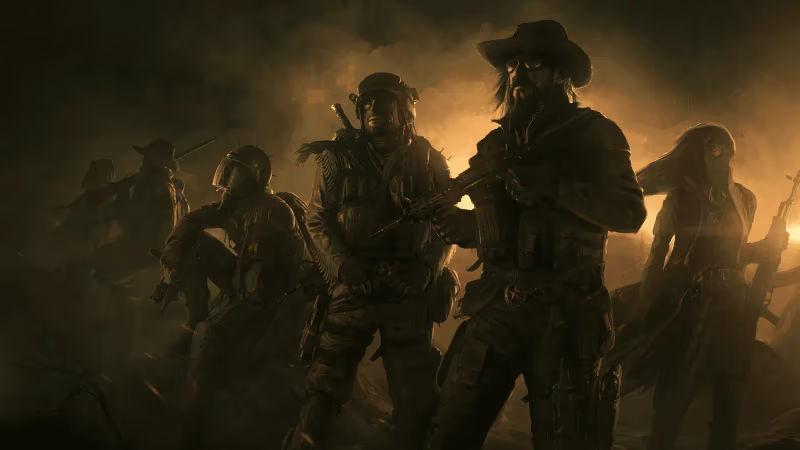
Wasteland 2 Concept Art - Inxile

When Brian Fargo launched the Kickstarter campaign for Wasteland 2, the gaming landscape was starving for old-school Computer Role-Playing Games (C-RPGs). The original 1988 Wasteland was the spiritual grandfather of Fallout, and inXile Entertainment set out to prove that complex, turn-based tactical RPGs still had a massive audience.
Set in a nuclear-devastated Arizona desert, you take command of a squad of four freshly recruited Desert Rangers—the self-appointed law enforcement of the wastes.
What begins as a routine investigation into the murder of a veteran Ranger named Ace quickly spirals into a sprawling conspiracy involving mutated horrors, rogue synth artificial intelligence, and rival post-apocalyptic factions.
Character creation in Wasteland 2 is an exercise in meticulous planning. Trying to build a "jack-of-all-trades" character is an express ticket to a wipe screen.
Instead, survival requires building a specialized squad where every member fulfills a vital niche:
As you explore, you can recruit up to three NPC companions. However, these recruits carry their own moral alignment and personality traits; fail to keep them happy, and they may refuse orders or even go rogue mid-firefight.
Wasteland 2 excels at grey morality where every decision carries severe weight.
The game forces impossible choices early on, such as choosing between responding to distress calls from Ag Center (a vital food research facility) or Highpool (a town providing water to the region). Responding to one guarantees the absolute destruction of the other, permanently altering available vendors, quests, and companion recruits for the rest of your playthrough.
Dialogue relies heavily on social skills—Asshole (intimidate), Smart Ass (logic), and Hard Ass (authority). Passing these checks can defuse hostility, bypass brutal firefights, or uncover hidden motives before a deal turns sour.
Combat plays out on a grid using an Action Point (AP) system dictated by your Rangers' core attributes. Position, height advantage, sight lines, and cover mechanics determine hit percentages and damage output.
Firearms feel grounded and dangerous. Rifles can jam mid-combat, requiring AP to clear the chamber, while heavy weapons consume ammo at an alarming rate.
If a Ranger drops to zero health, they enter a downed state; if a Surgeon fails to stabilize them before their bleed-out timer expires, that character dies permanently.
The Director's Cut edition migrated the game to Unity 5, delivering upgraded lighting, cleaner character models, and expanded voice acting, while introducing critical gameplay enhancements:
Pros:
Cons:
Wasteland 2: Director's Cut is a triumphant love letter to classic isometric RPGs. It delivers an uncompromising, narrative-rich adventure filled with dark humor, brutal tactical combat, and choices that genuinely matter.
For fans of deep role-playing mechanics and post-apocalyptic survival, this modern classic remains an absolute triumph.

Affiliate link: Support the blog via Instant Gaming at no extra cost.
Wasteland 2: Director's Cut
Others Posts
Master Lost Odyssey's Skill Link system, Aim Ring timing, Guard Condition, and early difficulty spikes with our ultimate beginner's guide.
How Capcom's icy masterpiece redefined the third-person shooter and unleashed a perfect storm of mechs, monsters, and ticking-clock survival.

Halo: Spartan Assault: 343 Industries' jump into the twin-stick shooter genre, the battles of Sarah Palmer, and the heavy baggage of its mobile origins.

The Ultimate Combat and Survival Guide: A comprehensive tactical manual for identifying threats, mastering your arsenal, and stockpiling the essential consumables needed to survive the hostile landscapes of a fractured America.
How to Master Combat, Weapons, and the Secrets of Alan Wake Remastered. Golden Rule: Light is your shield, and bullets are your sword.
Build the ultimate Wasteland 2 squad. We rank the best recruits in Arizona and LA, explain stats evolution, and list the most essential skills for smooth progression.

Are the Minecraft Dungeons DLCs worth buying? We break down all 6 expansions, their biomes, unique mechanics, boss fights, and rank the absolute must-haves.

Master turn-based combat in Gears Tactics. Learn to chain executions for infinite Action Points, optimize class builds, and crush colossal bosses.

Analysis of the PlayStation 4 and PS4 Pro hardware. We examine the shared CPU bottleneck, the mirrored butterfly GPU design, memory optimizations, and the hardware-level checkerboard rendering that enabled the 4K transition.

PlayStation 5 Pro hardware: PSSR, Advanced Ray Tracing, and the AI Revolution. We analyze Sony's PlayStation Spectral Super Resolution (PSSR), RDNA 4 Ray Tracing advancements, and the engineering behind the end of the Fidelity vs. Performance compromise.
guides
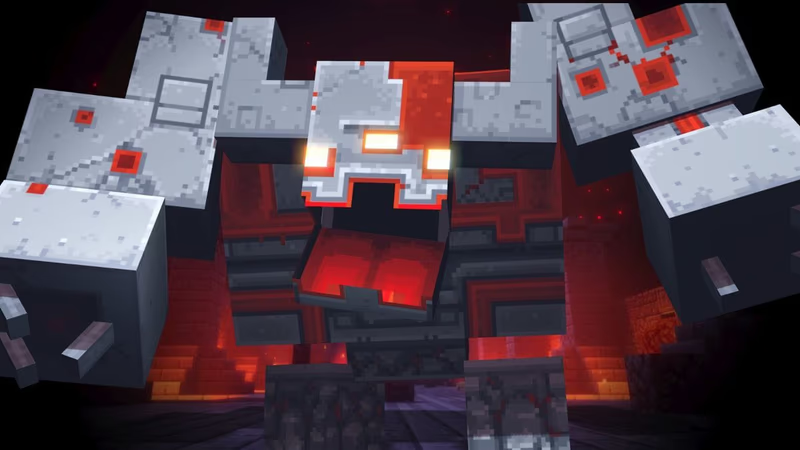
Conquer the toughest bosses in Minecraft Dungeons. Master attack patterns, exploit weak points, and equip the best builds for every major fight.
