Introduction
Tokyo, December 1988. The bubble economy is about to burst, but nobody on the ground knows it yet. Land prices in Kamurocho are inflating by the hour, and a single vacant lot is worth enough to kill over. Into this mess walks Kazuma Kiryu, a low-ranking Dojima Family enforcer framed for a murder he didn't commit, and across town in Sotenbori, Goro Majima grinds out his days running a cabaret club while the Tojo Clan keeps him on a leash. Yakuza 0 is a prequel, but it never plays like one. Ryu Ga Gotoku Studio built it as a mission statement for the whole series, and a decade after launch it's still the entry point critics and newcomers point to first.
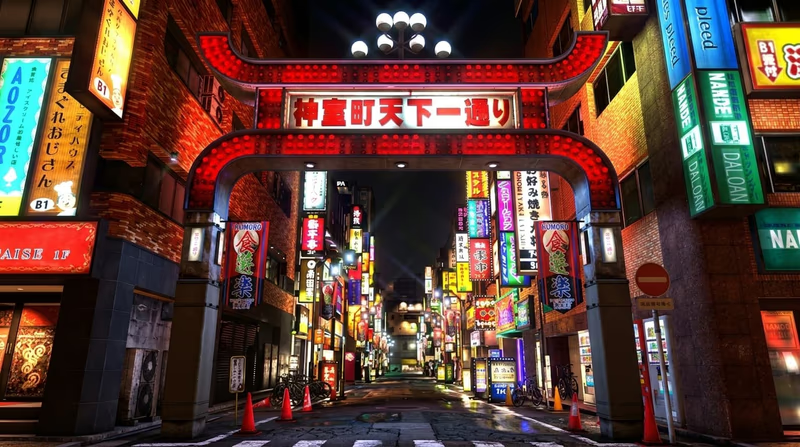
The pitch is simple on paper: two interlocking crime stories set a year apart in the same two cities, wrapped around a city-sim's worth of distractions. The execution is where it earns its reputation. Kamurocho and Sotenbori feel like actual neighborhoods, not theme-park backdrops, and the writing commits hard to both the melodrama of the main plot and the deadpan absurdity of everything surrounding it.
A Tale of Two Protagonists: Kiryu and Majima
Splitting the campaign between Kiryu and Majima is the smartest structural decision in the game. Kiryu's chapters play it straighter, a betrayal-and-redemption arc that drags him through the Dojima Family's internal rot. Majima's half is stranger and funnier, built around his forced servitude at the Grand cabaret club and his slow unraveling as a man desperate to prove he's still dangerous enough to matter.
Neither character gets shortchanged. Kiryu's stoicism works because the game surrounds him with people who talk enough for both of them; Majima's volatility works because the camera lingers on the exact moment his customer-service smile cracks. Side characters like Makoto Makimura and Mr. Shakedown round out a cast that treats every secondary player as someone with their own stakes in the real estate war underneath the main plot.
- Dual campaigns: Roughly half the story plays as Kiryu, half as Majima, with chapters alternating rather than running in parallel.
- Shared antagonists: The Dojima Family and the Omi Alliance's land-grab schemes tie both character arcs to the same central conspiracy.
- Tone whiplash: A heist-thriller cutscene can cut straight into a minigame about disco dancing, and the game never apologizes for it.
Combat: Four Styles, Zero Filler
Each protagonist carries three distinct fighting styles from the start, plus a fourth unlocked through the story, and switching between them mid-encounter is the mechanical backbone of every brawl. Kiryu's Brawler style trades punches with street thugs, Rush darts around groups with speed, and Beast turns him into a human wrecking ball who rips street signs out of the pavement to use as clubs. Majima's styles lean theatrical: Thug tears through crowds with a switchblade, Slugger swings a bat like a home-run hitter, and Breaker channels breakdancing into an evasive, almost comedic brawling style.
Heat Actions are the payoff for all of it. Context-sensitive finishers let Kiryu slam an enemy's head into a vending machine or Majima crack a pool cue over someone's skull, and the animation work behind these moves still holds up against far newer brawlers. Fights against Mr. Shakedown, the recurring suit-wearing loan shark who ambushes players on the street, remain some of the toughest random encounters in any beat 'em up from this era.
Kamurocho and Sotenbori: Playgrounds of Excess
Neither city is large by open-world standards, but density beats scale here. Every alley hides a vending machine, a convenience store with its own minigame, or an NPC with a one-off sidequest that spirals into something ridiculous. Kamurocho's neon canyon of hostess clubs and pachinko parlors contrasts sharply with Sotenbori's canal-side sprawl, and the 1988 setting lets the art team lean into period-accurate signage, cars, and fashion that give both cities a texture the modern-day Yakuza sequels can't replicate.
- Real Estate Royale: Kiryu's business-empire minigame turns Kamurocho's districts into a strategy board, buying out shops and fending off rival tycoons.
- Cabaret Club Czar: Majima's management sim has him recruiting hostesses, training their stats, and competing against a rotating cast of rival club owners.
- Period detail: Bubble-era advertising, boom boxes, and a soundtrack stitched through with licensed city pop sell the late-80s setting better than most dedicated period pieces.
The Side Content Rabbit Hole
This is the game that cemented the series' reputation for burying a hundred hours of side content under a twenty-hour main story, and nearly all of it still holds up. Disco dancing, darts, batting cages, a fully playable arcade cabinet of Sega's own Out Run and Space Harrier, a telephone club storyline, and a parody karaoke sequence all sit alongside each other without any of them feeling like padding. The substories, Yakuza's term for optional side quests, range from genuinely touching character studies to deliberately stupid comedy sketches about mistaken identity and public humiliation.