Anno 1800 Review: The Golden Age of City-Building
Anno 1800 rebuilds the series around the smoke and steel of the second Industrial Revolution, turning supply-chain logistics into the genre's richest city-building puzzle.

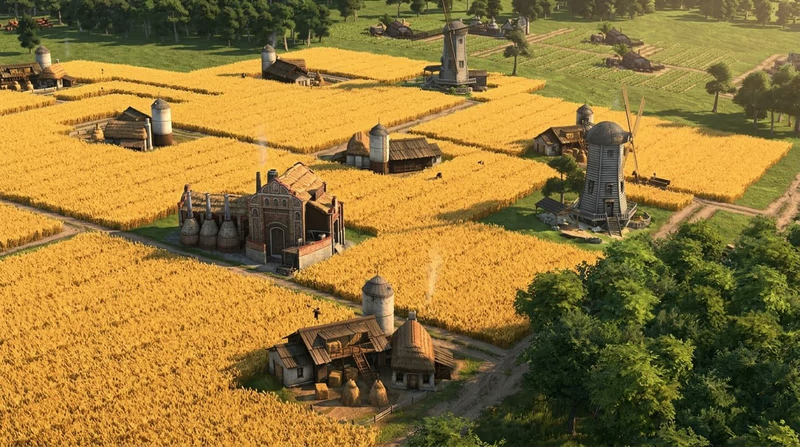
Anno 1800 — Ubisoft Blue Byte

Don't take the first patch of land the game offers you. Anno 1800 generates islands with wildly different fertility slots, and your capital island needs at least three or four of them, since your earliest production chains depend entirely on what the soil will grow.
Your population starts as Farmers, and their needs are deliberately simple: Fish or Schnapps for food, Soap for hygiene. Resist the urge to overbuild. A Farmer tier economy only needs a handful of fishery huts and a Potato farm feeding a Schnapps distillery to keep growth steady.
Promoting Farmers into Workers is the first real test. Workers add Schnapps, Work Clothes, and Beer to the needs list, each requiring its own multi-building chain, and this is where most new mayors watch their happiness bars collapse.
Sugar, Rum, and Cotton don't exist in the Old World at all, so reaching Artisans means crossing open water to a New World island. This is the point where Anno 1800 stops being a single-island puzzle and becomes a logistics game.
Artisans introduce Canned Food, Sewing Machines, and Glasses, goods that frequently depend on components sourced from both hemispheres at once. This is where the production-chain graph genuinely gets hard to hold in your head.
Most beginner cities don't die from an outside threat, they die from quiet neglect in one of a few specific spots.

Affiliate link: Support the blog via Instant Gaming at no extra cost.
Anno 1800
Others Posts
Anno 1800 rebuilds the series around the smoke and steel of the second Industrial Revolution, turning supply-chain logistics into the genre's richest city-building puzzle.
Blizzard's StarCraft proved three wildly asymmetric factions could stay perfectly balanced, turning a Warcraft II engine refit into the game that built South Korea's esports industry and defined competitive RTS for a generation.

New to StarCraft? Learn how to pick a faction, build a solid economy, and avoid the mistakes that get new commanders overrun in their first ladder matches.

Black Lab Games brought Warhammer 40k's tabletop wargame to life with grid-based tactics, blood-soaked executions, and the aggressive Momentum system.


Valve took the tightest puzzle design in the industry, doubled the toolset, added a co-op campaign and two of gaming's best-written characters, and somehow made the sequel better than the original.
Anno 1800 rebuilds the series around the smoke and steel of the second Industrial Revolution, turning supply-chain logistics into the genre's richest city-building puzzle.

An engineering retrospective on the Nintendo Game Boy Color. We explore how a double-speed Sharp SM83 core, a backward-compatible palette-mapped color LCD, and translucent 'Atomic Purple' shells turned a stopgap handheld into the system that carried Pokémon's second generation.

Analysis of the PlayStation 4 and PS4 Pro hardware. We examine the shared CPU bottleneck, the mirrored butterfly GPU design, memory optimizations, and the hardware-level checkerboard rendering that enabled the 4K transition.
games
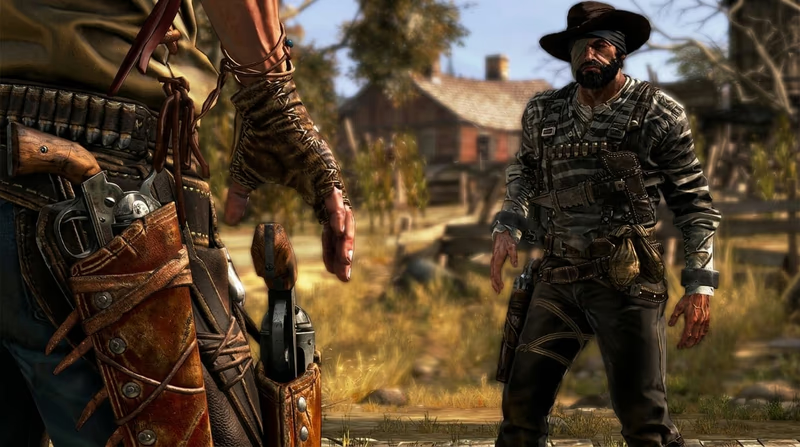
Techland traded gritty realism for painterly legend in this arcade-shooter retelling of the Old West's most famous gunslingers, bounty hunters, and outlaws.
