Diablo Beginner's Guide: Your First Steps Into Tristram
Updated at October 9, 2026
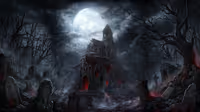
Diablo – Tristram Village Artwork
Choosing Your Class
The three starting classes don't just play differently, they demand entirely different approaches to the same dungeon.
Warrior: The forgiving choice. High starting vitality and strength let a new player absorb mistakes a Rogue or Sorcerer can't survive. Melee range means less kiting, less panic.
Rogue: A ranged specialist built around the bow, picking off enemies before they close the distance. Punishing in open rooms, vulnerable the moment something corners her.
Sorcerer: The riskiest start. Low health and armor make the early Cathedral levels brutal, but Firebolt clears corridors faster than any other class can manage at level one.
First run, pick the Warrior. The other two reward knowledge you don't have yet.
The First Descent: Surviving the Cathedral
Tristram's single staircase down is the only road in the game, and the first four Cathedral levels teach lessons that matter for the next fifty.
Clear Rooms Methodically, Don't Rush Corners: Rooms in the Cathedral often hide multiple monster groups behind doorways. Opening a door and immediately backing into a corridor lets you fight one or two enemies at a time instead of the whole room at once.
Watch Your Health Globe, Not the Clock: There's no time pressure on any Cathedral level. Resting to recover before taking the next fight is never wasted time.
Grab Every Potion, Skip Nothing: Healing and mana potions are scarce early and expensive at Pepin's, so every red or blue flask on the ground is worth the detour to pick up.
The Butcher Is a Trap, Not a Boss Fight: Level two's "Fresh Meat" message is a warning. The Butcher hits hard enough to kill a fresh character in two swings; lure him into a corridor and retreat rather than meeting him in his own room.
Managing Your Inventory from Day One
Diablo gives you a small grid and no stash, which makes early inventory decisions matter more than most players expect on a first run.
Sell Everything You Won't Wear: Unidentified items with unclear value, duplicate weapons, and armor below your current gear should go straight to Griswold or Pepin rather than clutter your bag.
Keep Identify Scrolls for Blue and Gold Items: Don't waste an Identify scroll on gray or white gear. Save them for magic (blue) and unique (gold) finds, where the hidden properties genuinely change whether an item is worth equipping.
Carry a Town Portal Scroll at All Times: A Town Portal scroll turns a near-death situation into a retreat instead of a corpse run. Never descend without at least one in reserve.
Griswold, Adria, and the Town Economy
Tristram's shops aren't just a convenience between dungeon runs, they're how a new character survives the early game at all.
Griswold the Blacksmith: Sells and repairs weapons and armor, and is usually the better source for a reliable early upgrade than whatever random drop you're hoping for.
Adria the Witch: Stocks scrolls and staffs, and restocks her inventory periodically, so it's worth checking back between dungeon trips rather than assuming her shelf is permanent.
Pepin the Healer: Sells potions outright for gold, which early on is often the faster way to stock up than hoping the dungeon drops enough.
Wirt the Peg-Legged Boy: His single mystery item is overpriced on purpose, but it occasionally hides a genuinely strong early find worth the gold if you can afford the gamble.
Early Build Priorities and Common Mistakes
A few habits separate a smooth first ten levels from a frustrating one.
Don't Dump All Points Into One Stat: Vitality matters for every class early on; starving it to maximize Strength or Magic leaves a character one bad encounter away from dying.
Retreat to Known Ground, Not Deeper: If a level feels too hard, go back up a level and grind it rather than pushing forward underleveled. The staircase down will still be there.
Multiplayer Changes the Math: Battle.net co-op scales monster difficulty up for extra players, so a four-player Cathedral run is not the same fight as a solo one, plan gear and potions accordingly.
Affiliate link: Support the blog via Instant Gaming at no extra cost.
Diablo
Developer: Blizzard North
Publisher: Blizzard Entertainment
Engine: Proprietary 2D in-house engine
Genre: Action RPG / Dungeon Crawler
Release date: December 31, 1996
Duration: 10-15 hours
Available on
PC (Windows)MacPlayStation
Others Posts
Diablo Review: The Dungeon Crawler That Created a Genre
Blizzard North's Diablo turned a slow, grid-based roguelike pitch into a real-time click-fest that invented the loot-driven dungeon crawler, built on randomized levels and a single, endless staircase down.
Mojang stripped away the pickaxe to deliver an addictive, classless isometric ARPG. Here is our full review of Minecraft Dungeons' co-op combat, gear builds, and endgame content.
Valve took the tightest puzzle design in the industry, doubled the toolset, added a co-op campaign and two of gaming's best-written characters, and somehow made the sequel better than the original.
Anno 1800 rebuilds the series around the smoke and steel of the second Industrial Revolution, turning supply-chain logistics into the genre's richest city-building puzzle.
An engineering retrospective on the Nintendo Game Boy Color. We explore how a double-speed Sharp SM83 core, a backward-compatible palette-mapped color LCD, and translucent 'Atomic Purple' shells turned a stopgap handheld into the system that carried Pokémon's second generation.
Analysis of the PlayStation 4 and PS4 Pro hardware. We examine the shared CPU bottleneck, the mirrored butterfly GPU design, memory optimizations, and the hardware-level checkerboard rendering that enabled the 4K transition.
games
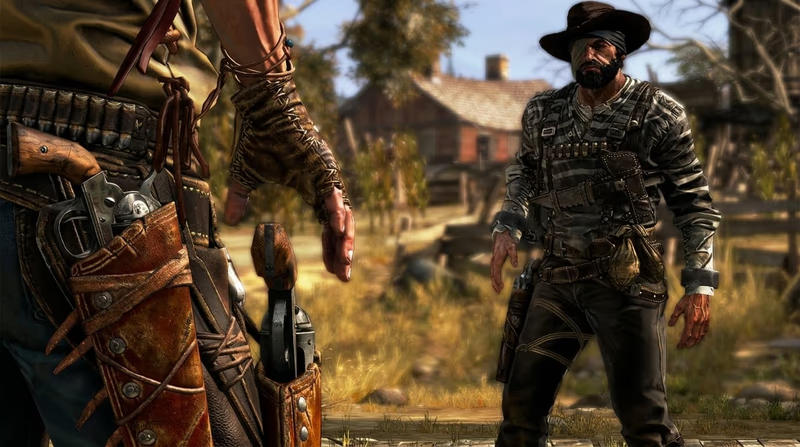
Call of Juarez: Gunslinger Review: A Tall Tale Told with a Smoking Gun
Techland traded gritty realism for painterly legend in this arcade-shooter retelling of the Old West's most famous gunslingers, bounty hunters, and outlaws.