Tomb Raider Review: Lara Croft's Brutal, Brilliant Origin Story
Crystal Dynamics' 2013 reboot strips away the puzzle-box gymnast and forges a desperate, bloodied survivor, delivering one of the decade's most confident franchise reinventions.
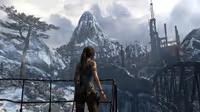
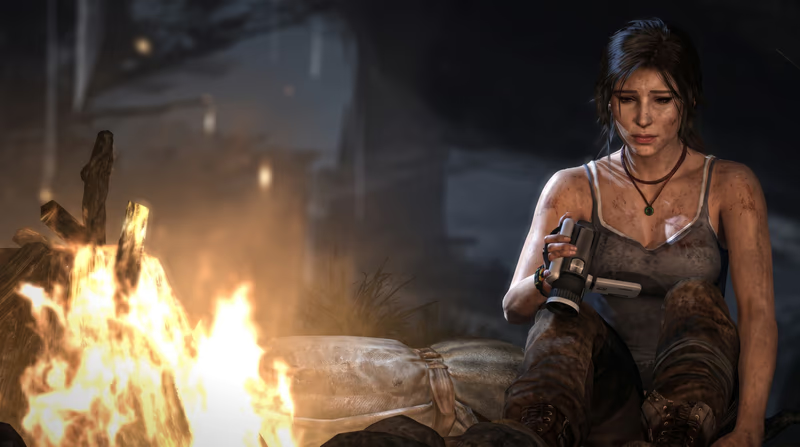
Tomb Raider (2013), Crystal Dynamics / Square Enix

The first hour throws Lara Croft into the Dragon's Triangle with nothing but a torch and a lighter, and the instinct to rush toward the next objective marker gets people killed against the Solarii Brotherhood faster than anything else. Slow down during the cave escape and the Mountain Village sections. These early zones teach the climbing axe, the bow, and the QTE prompts you'll lean on for the rest of the campaign, and skipping past them without exploring leaves salvage and relics behind that become tedious to backtrack for later.
Treat every new area as two passes: one beeline to the main objective to keep the story moving, then a second sweep once a base camp unlocks nearby, since fast travel makes that return trip nearly free.
Salvage is Yamatai's only currency, and it's finite per playthrough, so spending it wisely from hour one matters more than it will later.
Skill points come from experience, earned through kills, discoveries, and tomb completions, and they're separate from salvage entirely. The three trees, Survivor, Hunter, and Brawler, tempt you to spread thin, but a focused build pays off faster.
The Solarii Brotherhood's early patrols are small and isolated, which makes stealth kills with the bow the most efficient way through most camps. Breaking line of sight after a kill and letting Survival Instincts relocate the next target beats a straight firefight almost every time in the Mountain Village and Coastal Forest regions.
Once reinforcements arrive in a scripted ambush, fall back toward narrow chokepoints rather than open ground. Cover mechanics work best against two or three enemies at once, not a full squad converging from multiple angles. Fire arrows are worth saving for these ambushes specifically, since they stagger armored cultists that shrug off regular arrows.
Every base camp doubles as a skill-tree menu, a workbench, and a fast-travel node, which makes them the real backbone of Yamatai's structure. Fully explore a region before fast-traveling away from it, since returning later to mop up a single missed relic wastes more time than finishing the sweep in one pass.
Challenge tombs are entirely optional, but the early ones in the Mountain Village and Shantytown take under ten minutes each and hand over a guaranteed skill point. Prioritize these over scattered documents if time is tight, since skill points shape how Lara plays for the rest of the campaign while documents are purely lore.
GPS caches and relics matter less mechanically, but relics in particular unlock extra journal context on Himiko and the Endurance crew that pays off once the story's twists land in the back half. Grabbing them as you pass, rather than detouring hard, keeps the pacing intact without sacrificing the lore.

Affiliate link: Support the blog via Instant Gaming at no extra cost.
Tomb Raider
Others Posts
Crystal Dynamics' 2013 reboot strips away the puzzle-box gymnast and forges a desperate, bloodied survivor, delivering one of the decade's most confident franchise reinventions.
Shadow of the Colossus: Fumito Ueda's timeless journey, its lonely world, Wander's tragic quest, and the majesty of the 16 colossi.
Capcom's remake of Resident Evil 3 trades Nemesis's slow dread for a sprint, delivering a tighter, more action-driven nightmare that burns bright but doesn't last long.

A new Vault Dweller's first hours in Fallout decide everything that follows — here's how to build a SPECIAL character, manage the water chip clock, and survive the Hub without getting gunned down.
Rockstar San Diego's Red Dead Redemption traded Liberty City's skyline for the dying American frontier, delivering one of the finest open-world westerns ever made.

Valve took the tightest puzzle design in the industry, doubled the toolset, added a co-op campaign and two of gaming's best-written characters, and somehow made the sequel better than the original.

Anno 1800 rebuilds the series around the smoke and steel of the second Industrial Revolution, turning supply-chain logistics into the genre's richest city-building puzzle.
An engineering retrospective on the Nintendo Game Boy Color. We explore how a double-speed Sharp SM83 core, a backward-compatible palette-mapped color LCD, and translucent 'Atomic Purple' shells turned a stopgap handheld into the system that carried Pokémon's second generation.

Analysis of the PlayStation 4 and PS4 Pro hardware. We examine the shared CPU bottleneck, the mirrored butterfly GPU design, memory optimizations, and the hardware-level checkerboard rendering that enabled the 4K transition.
games
Techland traded gritty realism for painterly legend in this arcade-shooter retelling of the Old West's most famous gunslingers, bounty hunters, and outlaws.
